
For decades, Hollywood and television studios have relied heavily on fiction for inspiration. Bestselling novels, crime thrillers, fantasy epics, and romance stories have long dominated adaptation deals. But something interesting has been happening in recent years.
More producers are turning their attention to memoir.
Not because fiction has lost its appeal. Quite the opposite. But audiences have developed a growing appetite for stories that feel lived rather than invented. They want complexity. They want emotional truth. They want characters whose struggles don't feel manufactured by a screenwriter but shaped by real life.
And that's exactly why Cathie Beck's work feels so relevant in this moment.
Her memoirs aren't built around fictional plot twists or carefully engineered drama. They emerge from experiences she actually lived—childhood instability, profound friendship, grief, resilience, ambition, and the relentless determination to keep moving forward when life refuses to cooperate.
Those are the kinds of stories producers are increasingly seeking. Because sometimes reality creates narratives more compelling than fiction ever could.
Isn't Real Life Often Stranger—and Richer—Than Fiction?
When producers evaluate potential projects, they look for several things. They want compelling characters. They want emotional stakes. They want transformation. They want stories that can connect with audiences on a deeply human level.
Cathie Beck's life checks every one of those boxes.
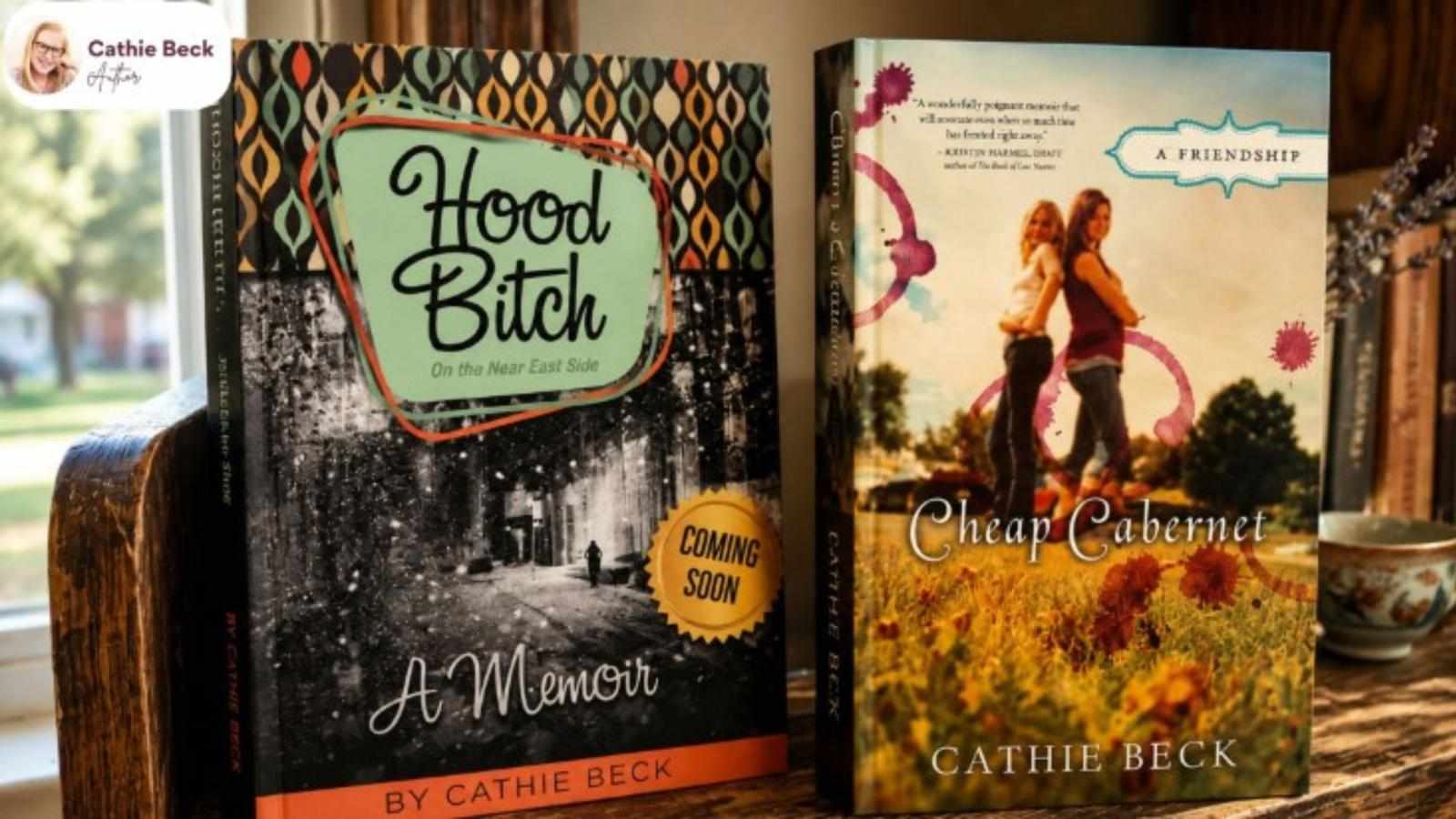
Long before she became a published author, she was navigating a childhood marked by instability and constant change. In Hoodbitch: On the Near Eastside, she chronicles moving twelve times before the age of seventeen through the fractured landscape of Indianapolis during the 1960s and 1970s.
That alone contains the foundation of powerful visual storytelling. A young girl searching for stability. A family struggling against circumstances. Neighborhoods that become both refuge and obstacle. A determination to build a future despite uncertainty.
The reason memoirs like this attract attention is simple: they already contain authentic character arcs. The protagonist doesn't need to be invented. The emotional journey is already there.
When readers encounter Hoodbitch: On the Near Eastside, they aren't simply reading about events. They are experiencing a young woman's evolution. They witness the development of resilience, resourcefulness, and self-awareness. Those qualities translate remarkably well to screen.
It's no surprise that conversations about how to buy adaptation rights for memoirs have become increasingly common throughout the entertainment industry. Producers understand that audiences respond to authenticity. The messiness of real life often feels more relatable than the tidy resolutions common in fictional narratives.
Cathie's work offers exactly that kind of authenticity. Her writing doesn't present easy answers or simplistic heroes. Instead, it explores complicated realities with honesty and nuance. The result is storytelling that feels emotionally immediate.
Then there is Cheap Cabernet: A Friendship. Unlike many memoirs focused primarily on individual achievement, this story centers on an extraordinary friendship. It examines loyalty, loss, humor, illness, and the enduring connections that shape our lives.
Friendship stories remain surprisingly underrepresented in film and television compared to romance narratives. Yet audiences consistently respond when they are done well.
Why? Because friendship is universal. Everyone understands the fear of losing someone they love. Everyone understands the joy of being truly seen by another person. Everyone understands how certain relationships become part of their identity.
Those themes are timeless. They also happen to be highly cinematic.
What Makes Cathie Beck's Stories Feel Ready for the Screen?
The best adaptations begin with strong source material. Not necessarily because the story is dramatic, but because it is emotionally layered. Cathie Beck's memoirs possess that quality in abundance.
Her writing explores class, family dynamics, female friendship, ambition, grief, survival, and reinvention. These are themes that resonate across generations and demographics. More importantly, they offer opportunities for nuanced storytelling rather than formulaic entertainment.
What stands out most is her ability to balance vulnerability with humor. Even during difficult moments, her work retains warmth and humanity. Readers are invited into painful experiences, but they are never left feeling hopeless. There is resilience beneath the sorrow and humor beneath the hardship.
That emotional range is valuable for filmmakers. Stories that operate on only one emotional note often struggle to sustain audience engagement. Cathie's memoirs move fluidly between heartbreak, reflection, wit, and hope. That complexity creates richer possibilities for adaptation.
It's one reason industry professionals continue searching for memoirs with strong narrative foundations. The conversation about how to buy adaptation rights for a memoir isn't merely about acquiring a book. It's about identifying stories that already contain cinematic DNA.
Cathie's work offers that naturally. Consider her own publishing journey. After spending years writing and revising her manuscript, she faced rejection after rejection from publishers. She rewrote large sections of her work. She lost representation. She shelved the manuscript. She questioned whether the dream was worth pursuing.
Then she reinvented her approach entirely. She self-published. She built an ambitious marketing campaign. She endured criticism and skepticism. And ultimately, she secured major publishing interest that transformed her career. If that storyline appeared in a screenplay, audiences would likely describe it as inspiring.
The fact that it actually happened makes it even more compelling. This is precisely why producers increasingly seek opportunities to option memoir for film or TV purchase. Real-life stories often contain emotional journeys that feel earned rather than manufactured.
Cathie Beck's life and work embody that principle.
Her memoirs aren't simply collections of memories. They are stories of transformation. They explore what it means to survive difficult circumstances without losing hope. They examine how relationships shape identity. They reveal the resilience that emerges when people refuse to give up on themselves.
Those themes transcend genre. They appeal to readers. They appeal to viewers. And increasingly, they appeal to producers looking for meaningful projects.
As the entertainment industry continues searching for stories that stand out in a crowded marketplace, memoirs like Cathie Beck's become even more valuable. They offer authenticity, emotional depth, and unforgettable characters grounded in real experience.
That is why conversations about optioning memoirs for film or TV purchases are becoming more frequent across publishing and entertainment circles.
And it's why authors like Cathie Beck are particularly well positioned for this moment. Because while fiction can imagine extraordinary lives, memoir reminds us that extraordinary lives already exist. Sometimes all we have to do is tell the story.









Write a comment ...